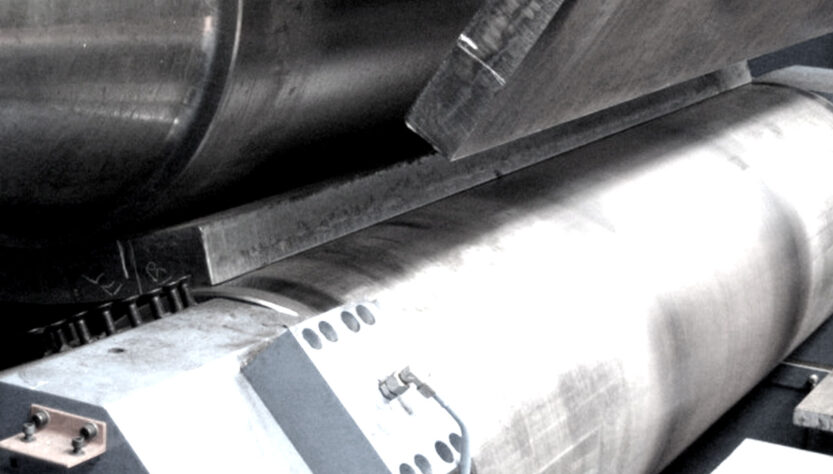
In every mechanical workshop or metal fabrication company, productivity does not depend solely on the quality of workmanship,but also on the operational continuity of the machines.
When a plate roll stops, a press brake loses accuracy, or a shear begins cutting out of square, the issue is not just technical — it is economic.
Every hour of downtime affects deliveries, staff efficiency, ongoing orders and overall reputation.
For this reason, machine tool service should not be considered a simple “on-call cost”, but rather a strategic element of industrial management.
In this guide you will find a clear and practical overview of what machine tool service truly means today:
from preventive maintenance to diagnostics, from retrofit solutions to safety upgrades and spare parts management.
The goal is to help you understand what to expect from a technical partner and which factors to evaluate when choosing a reliable, responsive and results-oriented service provider.
What Machine Tool Service Actually Includes
Machine tool service consists of a range of activities designed to keep — or restore — equipment to optimal working conditions while minimizing risk and maximizing efficiency.
This includes work on mechanical, hydraulic, electrical and electronic components, as well as software checks, calibrations, inspections and final testing.
Many companies operate with mixed machine fleets: modern systems working alongside older equipment that remains essential for specific processes.
In such environments, effective service must be capable of working across brands and models, handling urgent breakdowns and, when needed, proposing improvement solutions — not just repairs.
Common Issues (and Why They Keep Reappearing)
Many failures do not happen suddenly.
They are often preceded by minor warning signs that go unnoticed or are postponed due to production pressure.
As long as the machine “still works,” intervention is often delayed.
Yet those early signals are exactly what allow maintenance at lower cost and with shorter downtime.
- Plate rolls and profile bending machines: reduced force, misalignment, hydraulic leaks, cylinder issues, instability in the hydraulic system and reduced repeatability.
- Press brakes: angle inaccuracies, part-to-part inconsistencies, outdated control systems, safety compliance needs, wear on tooling and electronic faults.
- Shears: irregular cutting quality, blades needing rotation or replacement, improper adjustments, clutch revisions (on mechanical models) and lubrication problems.
- Workshop machine tools: band saws, drills, lathes and milling machines requiring testing, repair and targeted technical inspections.
The reason these issues recur is simple: intervention typically occurs only after a breakdown.
However, the most effective service approach is the one that reduces unplanned downtime, stabilizes performance and makes production more predictable.
Preventive Maintenance: The Most Underrated Strategic Tool
Preventive maintenance does not mean “servicing when nothing is wrong.”
It means implementing a structured schedule of inspections and targeted actions that identify wear before it becomes failure.
The result: fewer emergencies, better organization, improved safety and more predictable industrial costs.
A well-designed preventive maintenance plan may include:
- periodic mechanical, electrical and hydraulic inspections;
- verification of settings and operational parameters;
- pressure checks, leak detection and cylinder condition analysis;
- lubrication system inspection and wear-part monitoring;
- performance and repeatability checks to reduce scrap.
What truly makes the difference is customization: a tailored plan built around actual machine usage, working hours and production criticality.
This is where a technical partnership becomes a competitive advantage.
Rapid Intervention and Diagnostics: When Downtime Cannot Wait
Even with preventive strategies in place, unexpected breakdowns may occur.
In such cases, service quality is not measured only by response time, but by diagnostic capability, spare part availability, multidisciplinary expertise and the ability to restore safe production quickly.
Advanced service providers often begin with remote analysis — sometimes even a phone consultation —
to identify likely causes, reduce downtime and prepare the intervention with the right tools and components.
This structured approach significantly shortens recovery time and minimizes restart risks.
Spare Parts Management: Availability and Custom Solutions
Spare parts availability is often the true bottleneck.
A technician may be ready, but without the correct component, production remains stopped.
Three key factors matter:
- Availability: having frequently needed components in stock or quickly accessible.
- Compatibility: managing machines of different brands, including older models.
- Custom manufacturing: reproducing or adapting parts when originals are no longer available.
In plate rolls, press brakes and shears, spare part management is not only about replacement, but also about ensuring proper restart performance.
A poorly installed component without proper testing can cause new instability, reduced accuracy or accelerated wear in related systems.
Retrofit and Upgrading: When Modernization Makes More Sense Than Replacement
Not every older machine needs to be replaced.
Often, the mechanical structure remains solid, but the control system is outdated, the hydraulic system inefficient, or safety standards no longer adequate.
In such cases, retrofit solutions provide improved performance, reliability and safety with a more sustainable investment than purchasing new equipment.
Retrofit operations may include:
- upgrading or replacing control systems when they limit productivity;
- hydraulic system improvements to restore force, stability and repeatability;
- software and hardware updates to enhance manageability and efficiency;
- performance optimization even on obsolete machines, with final testing and validation.
Retrofit is particularly suitable when: the machine is production-critical, breakdown frequency increases, original spare parts become difficult to source, or precision requirements exceed previous standards.
Safety Upgrades and Compliance: Productivity and Responsibility
Modern machine tool service also includes safety upgrades.
Compliance is not about adding a single device, but about reviewing systems to align them with real operational use, reducing operator risk and protecting company responsibility.
On press brakes and shears, this may involve specific safety device installations, regulatory upgrades and thorough post-intervention testing.
Safety does not reduce productivity: stable and compliant machines operate more reliably, with fewer interruptions and fewer operator errors.
How to Identify a Truly Reliable Technical Partner
Choosing the right service provider requires practical evaluation.
Beyond reputation, it is important to understand how they operate.
- Comprehensive expertise: mechanical, electronic and hydraulic knowledge integrated into one service approach.
- Structured responsiveness: fast intervention supported by preparation and organization.
- Results orientation: safe restart, testing and performance stability — not just temporary fixes.
- Spare parts management: availability and adaptability even for older machines.
- Consultative approach: guidance on preventive maintenance, retrofit and performance improvement.
In essence, a strong technical partner becomes an extension of your workshop: preventing problems, restoring efficiency and supporting long-term operational stability.
A Strategic Choice to Reduce Downtime and Operational Stress
Machine tool service is far more than emergency repair.
It is a strategic function that protects workflow continuity, enhances product quality, improves safety and stabilizes maintenance costs.
If you are looking for a technical reference capable of supporting fabrication and workshop machinery —
including plate rolls, press brakes, shears and other machine tools — with a structured approach to diagnostics, targeted intervention, spare parts and performance improvement, you can learn more about their operational services by visiting the technical team at Cocchi Andrea.
Ultimately, the difference is not made by a single repair — it is made by continuity.
And continuity begins with service designed to keep machines working better, longer and with fewer unexpected interruptions.